The packing list that survives real travel days
Most overpacked bags are filled with hope, not with items that earn their space. This guide shows a trim method for family travel days: three small kits, a short decision filter, and a clear list of what can stay home without making the outing harder.
Start with the day you will actually live
Before you open a suitcase, write the real shape of the day: wake time, rest window, meal windows, and the longest transfer. Packing fails when it tries to support an imagined itinerary with six stops and perfect moods. It works when it supports the day your child can actually keep.
Ask what will be in your hands after twenty minutes outdoors, after a delayed meal, and after a refusal to walk. Those moments decide which objects matter. A soft change of clothes, a familiar cup, and a simple activity often outrank specialty gear that looked clever at home.
Keep the list short on purpose. If an item only helps in a rare emergency that you can solve another way, it is a candidate for leaving behind. The aim is not to prepare for every story you have heard. The aim is to carry what repeatedly earns its weight on ordinary hard days.
Use a three-bag filter instead of one giant pile
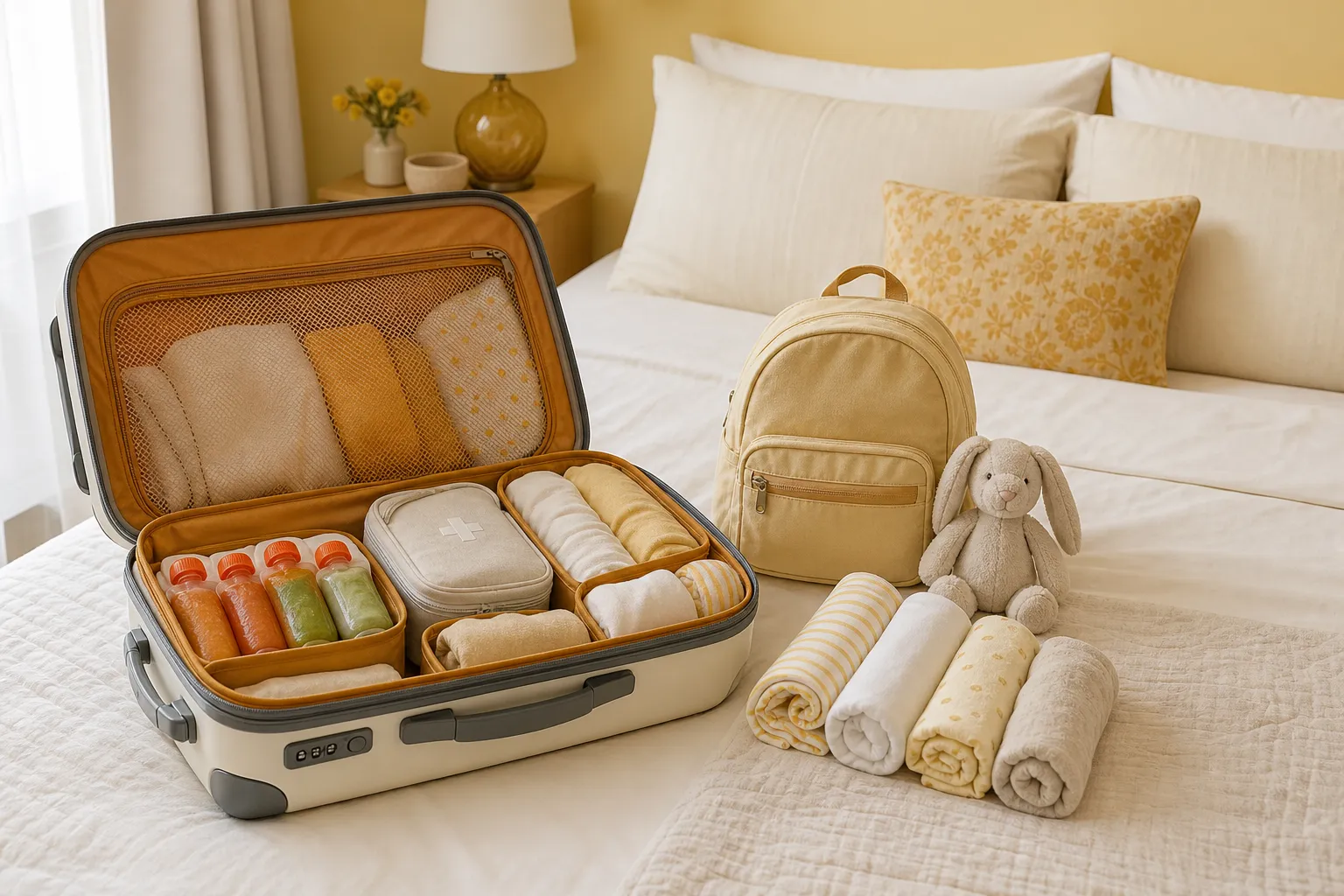
Split packing into three jobs so decisions stay clear. The seat-back kit stays within reach during transfers. The day bag covers outdoor hours. The lodging bag only needs to open at the room. When everything lives in one suitcase, you keep digging and the day starts to feel heavier than the route.
- Seat-back kit: snacks that do not need refrigeration, wipes, a spare top, a small toy with no tiny parts, and any comfort object that prevents a spiral during waits.
- Day bag: water, a compact first-aid pouch, weather layer, spare socks, and one reset activity for a low-energy stretch between stops.
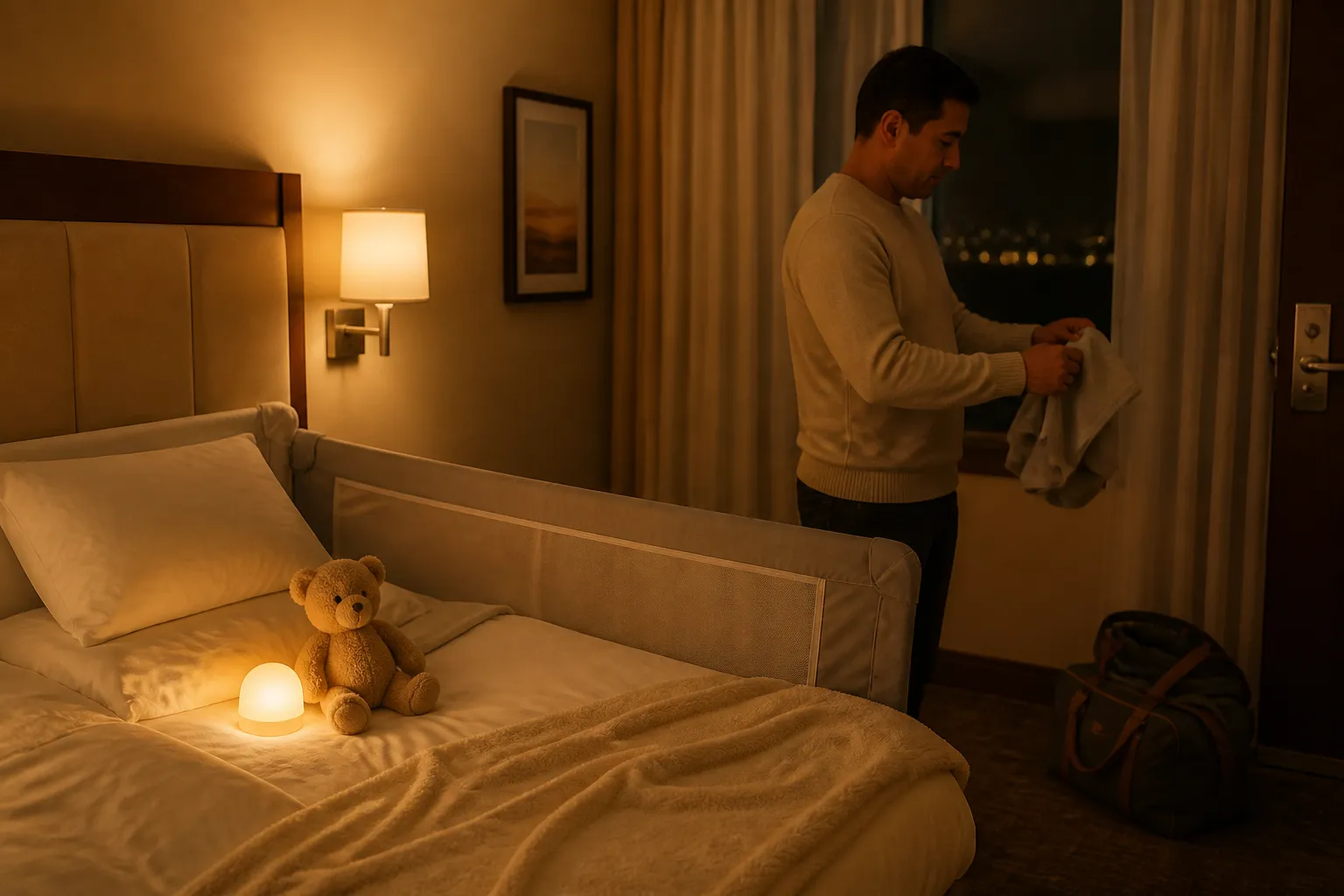
- Lodging bag: night clothes, morning clothes, bath basics, and the few sleep cues that travel well, such as a familiar blanket edge or white-noise option you already use at home.
If an item does not clearly belong in one of those three places, pause before packing it. Many hopeful extras fail this test: specialty gadgets, duplicate outfits “just in case,” and activities that only work with a table, a power outlet, and a calm child.
If you cannot name the moment an item will save, it is probably traveling as comfort for the adult planner, not as support for the child on that route.
What usually earns its weight
Across family trips, a small set of items shows up again and again as useful. Familiar snacks reduce the panic when local food does not land. A complete change of clothes prevents one spill from rewriting the afternoon. A thin layer handles wind or air-conditioned rooms without forcing a full spare wardrobe into the bag.
A compact first-aid pouch should stay boring and specific: plasters, antiseptic wipes, any regular medication your child already uses, and the dosing tool you trust. Do not turn it into a clinic in a zip bag. The point is a quick response to ordinary scrapes and discomfort, not a fantasy of total medical independence on the road.
- One comfort object that still works when the child is tired, not only when the child is cheerful.
- Two reliable snack options that do not depend on finding the perfect cafe.
- One reset activity that fits a lap, a stroller, or a waiting chair.
- Sleep cues that are small enough to unpack in under a minute at lodging.
- A spare outfit stored where you can reach it without unpacking the whole case.
What can stay home more often than you think
Hopeful extras are easy to spot once you name them. Multiple “maybe” outfits for photo moments rarely get worn. Bulky toys that need floor space fight small lodging layouts. Specialty cooking tools assume a kitchen you have not confirmed yet. Duplicate shoes for a short trip usually mean you are packing anxiety, not a real weather forecast.
Also watch for objects that only help if every adult hand is free. If an item requires assembly, constant supervision, and a clear table, it may create work instead of relief. Travel days already ask enough of your attention. Gear should reduce decisions, not invent new ones in a crowded lobby or station.
For first overnights, trim even harder. A shorter trip forgives less luggage and rewards faster unpacking. Pack for one evening, one morning, and one reset after a hard transfer. Leave the “in case we extend” pile at home unless that extension is already booked.
Build the seat-back kit like a delay is normal
Delays are not a special event in family travel. They are part of the schedule you should expect. The seat-back kit exists for the minutes when movement stops and patience thins: boarding lines, traffic, late meals, and the quiet stretch before a rest window opens.
Choose snacks your child already accepts. Novelty food is a gamble when energy is low. Keep mess manageable. A wipe pack and a spare top matter more than an elaborate activity set that spills across three seats. If more than one child is traveling, duplicate only the items that prevent conflict, not every object in matching colors.
Rotate one small activity instead of packing five. A single familiar option used at the right moment beats a bag of ignored toys. Put the kit where the accompanying adult can reach it without standing up or unpacking under a seat. Reachability is part of usefulness.
Pack the lodging bag for arrival, not for display
Arrival is often the fragile hour. Children are hungry, overstimulated, or close to a missed rest window. The lodging bag should open into a calm sequence: lights, bathroom basics, sleep clothes, comfort object, and a simple snack if dinner is going to be late.
Avoid nesting important items deep in a large suitcase. If bedtime depends on finding one specific shirt or blanket, that item belongs near the top or in its own pouch. The faster you can rebuild a familiar wind-down, the less the new room feels like a hard reset for the whole group.
In the morning, the same bag should support a short exit. You do not need a full wardrobe on display. You need clean clothes, teeth care, and enough flexibility for a spill before you leave. When lodging packing is this direct, less of the trip goes to zippers and more of it goes to protecting pace.
A trim checklist before you close the case
Use one final pass the evening before departure. This is not a second shopping list. It is a removal pass. Hold each item and answer three questions: Which bag does it belong to? Which moment does it support? What happens if this stays home?
- Remove duplicates that serve the same job.
- Remove anything that only helps a perfect day.
- Remove gear that depends on unconfirmed lodging features.
- Keep the seat-back kit complete and reachable.
- Keep sleep cues easy to unpack on arrival.
If you feel uneasy after trimming, write the fear down instead of adding objects. Often the fear is about a hard moment, not about a missing product. Hard moments are handled better with pacing, food timing, and exit options than with another pouch of unused supplies in the case.
After the trip, revise the list while memory is honest
The best packing list is revised after real travel, not before the first departure. When you get home, note what you used every day, what you used once, and what never left the bag. Be blunt. Sentimentality fills luggage faster than any weather forecast.
Keep a short living list for the next trip: core kit, seasonal layer, child-specific comfort item, and open questions for lodging. If an item failed because the route was too ambitious, fix the route before you expand the suitcase. Packing cannot rescue a day map that ignores rest windows.
Over time, this method becomes quieter. You stop arguing with yourself in the hallway the night before. You pack fewer objects with clearer jobs. The suitcase gets lighter, and the day becomes easier to carry — not because travel turned simple, but because the bag finally matches the trip you are actually taking on the road.
Handle weather layers without packing a second wardrobe
Weather packing expands fastest when fear leads. Instead of packing for every forecast, pack one adaptable layer system: a light insulating piece, a wind or rain shell if conditions call for it, and clothes that can dry overnight. Avoid specialty pieces that only work for one unlikely hour of the trip.
Dress the child in the most flexible outfit at departure, then keep the next change easy to reach. If temperatures swing widely, prioritize layers that stack rather than entire alternate outfits. You will move faster at the lodging door and during sudden wind on an exposed walk.
Check laundry options only if the stay is long enough to matter. For a short overnight, laundry access rarely justifies extra clothing volume. Wash concerns are often a reason people overpack. A shorter clothing plan with one guaranteed spare usually outperforms a suitcase filled with unused backups.
When two adults pack, assign ownership
Shared packing fails when both adults add “just in case” items and neither removes anything. Decide who owns each kit. One person maintains the seat-back kit. One person confirms the lodging bag. Both review the removal pass together so the suitcase does not quietly grow overnight.
Children old enough to participate can help choose one comfort object and one activity. This reduces negotiation later and prevents adults from packing three substitutes for the same job. Participation also helps the child treat the bag as part of the plan rather than as a mystery pile that appears at the door.
If grandparents or another caregiver join the trip, share the same filter with them early. Extra loving hands often bring extra objects. A clear kit system keeps helpful intentions from becoming bulk you carry through every transfer.
Make a final doorway check on departure morning
Before you leave home, run a doorway check that only covers the items that ruin a day if forgotten: medication if needed, comfort object, seat-back snacks, water, and the keys or access details required for lodging. This is not a second full pack. It is a short confirmation of high-cost misses.
Put the seat-back kit where it will actually be used during the first transfer. Many families pack well and then bury the useful bag under larger luggage. Reachability is part of the packing method. If you cannot access the kit during a delay, it does not exist for that moment.
Then close the process. Stop opening the suitcase for one more hopeful item. A finished list protects attention for the harder work of pacing, rest, and food timing once the day begins.