How to shape a first overnight with a toddler
A first overnight with a toddler is less about proving you can travel and more about learning what your child can carry. Closer, shorter, and quieter usually beats ambitious. This guide shows how to shape the night, guard bedtime, and drop plans that only work on paper.
Treat the first overnight as a practice format
The first night away is a test of systems, not a showcase trip. You are learning how your toddler handles a new sleep space, a shifted dinner, and the excitement that refuses to turn off at the usual hour. That is enough work for one outing. A packed sightseeing list on top is not required.
Choose a format that leaves room for friction. A nearby stay with one night, or two at most, gives a short feedback loop. If bedtime collapses, you are not trapped in a long itinerary that assumes everyone will rebound by sunrise. Practice formats protect confidence for later trips.
Distance matters. A long transfer before the first night multiplies fatigue before the hard part even starts. If lodging is reachable without draining the day, the evening has a better chance of looking like a version of home instead of an endurance event.
Build the day backward from bedtime
Start with the sleep target, then place everything else. Decide the wind-down window first. Work backward through dinner, the last active stop, arrival, and departure from home. When bedtime is the anchor, ambitious extras become obvious candidates to cut.
- Set a realistic lights-out range based on your toddler’s usual pattern.
- Protect a buffer before that range for bath or wipe-down, pajamas, and a familiar cue.
- Place dinner early enough that hunger does not collide with wind-down.
- Allow only one main daytime stop, and keep it easy to leave.
- Arrive with enough margin that unpacking does not steal the evening.
If any step feels tight, shorten the daytime plan rather than compressing sleep. Toddlers rarely compensate for a late night with cheerful flexibility the next morning. Adults sometimes hope they will. The day map should not rest on that hope.
If the overnight only works when bedtime goes perfectly, the plan is too fragile for a first try.
Make the room feel boring in useful ways
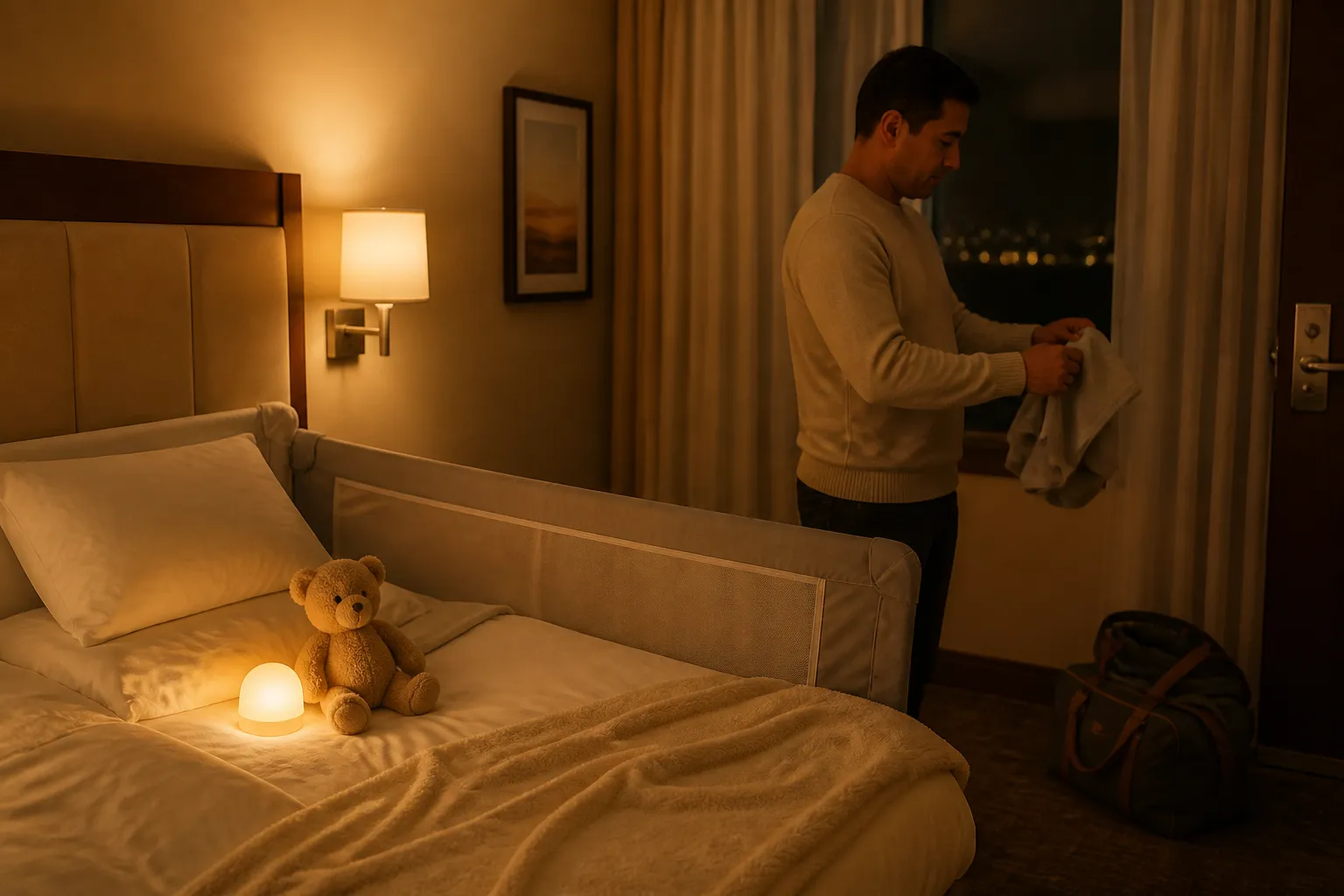
New rooms are stimulating. The job is to reduce novelty at the exact hour when calm is needed. Unpack sleep cues early: familiar blanket, usual pajamas, the same short book sequence if you use one, and a night-light setup that resembles home as closely as possible.
Check the practical sleep blockers on arrival. Can the room darken? Is the street loud? Is the crib or toddler bed stable and placed away from cords and drafty windows? Fix what you can before dinner. Searching for solutions after a child is already past threshold usually ends as improvisation under pressure.
- Create a clear sleep corner even if the room is small.
- Keep stimulating toys out of the bedtime zone.
- Have a simple snack ready if dinner runs long.
- Decide which adult leads wind-down so cues stay consistent.
- Prepare the morning bag so night waking does not turn into full unpacking.
Drop the “while we are here” extras
First overnights often fail because adults try to harvest value from every hour. One more park, one more shop, one more stroll after dinner can look harmless and still push bedtime past the point of recovery. Value on this trip is information: what the toddler needs in a new place.
Write a leave-behind list before you go. Include the attractions you will intentionally skip. This reduces guilt in the moment. You are not failing a destination. You are protecting the experiment. Later trips can hold wider routes once the overnight pattern is clearer.
Keep one optional backup that is genuinely optional. A short outdoor loop near lodging is enough. If energy is still good, use it. If energy is gone, return without negotiation. Optional only works when declining it does not feel like losing the whole outing.
Plan meals as mood insurance
Food timing can rescue or ruin the first night. Aim for an early dinner with familiar options available. If lodging has a kitchen corner, use it for a simple fallback. If not, identify one nearby option that can handle a quick order before everyone is depleted.
Pack the same snacks you trust at home. Novelty eating is a poor bet after a transfer. A toddler who rejects dinner still needs a path to bedtime that does not become a long hunt through unfamiliar menus. Meal backup is part of sleep planning, not a separate luxury.
Morning should also stay simple. A calm breakfast at lodging or very nearby often beats racing out to a celebrated spot. The second day teaches you as much as the first night. Start it with blood sugar and patience intact.
Prepare for hard moments without writing a disaster script
Assume there may be protest at lights-out, early waking, or a refusal to settle in a strange bed. Preparation means having a response pattern, not expecting failure. Decide in advance who stays in the room, what reassurance language you will repeat, and when you will pause and reset rather than escalate.
- Keep the room dim and the script short.
- Avoid introducing brand-new sleep props at the hardest minute.
- Use a brief reset outside the sleep battle if panic rises for everyone.
- Protect the next rest window instead of chasing a perfect night narrative.
Hard moments do not mean the overnight was a mistake. They mean you collected data. Note what helped and what made things louder. That note is more valuable than forcing a cheerful summary the next morning.
Choose lodging that supports a short honest stay
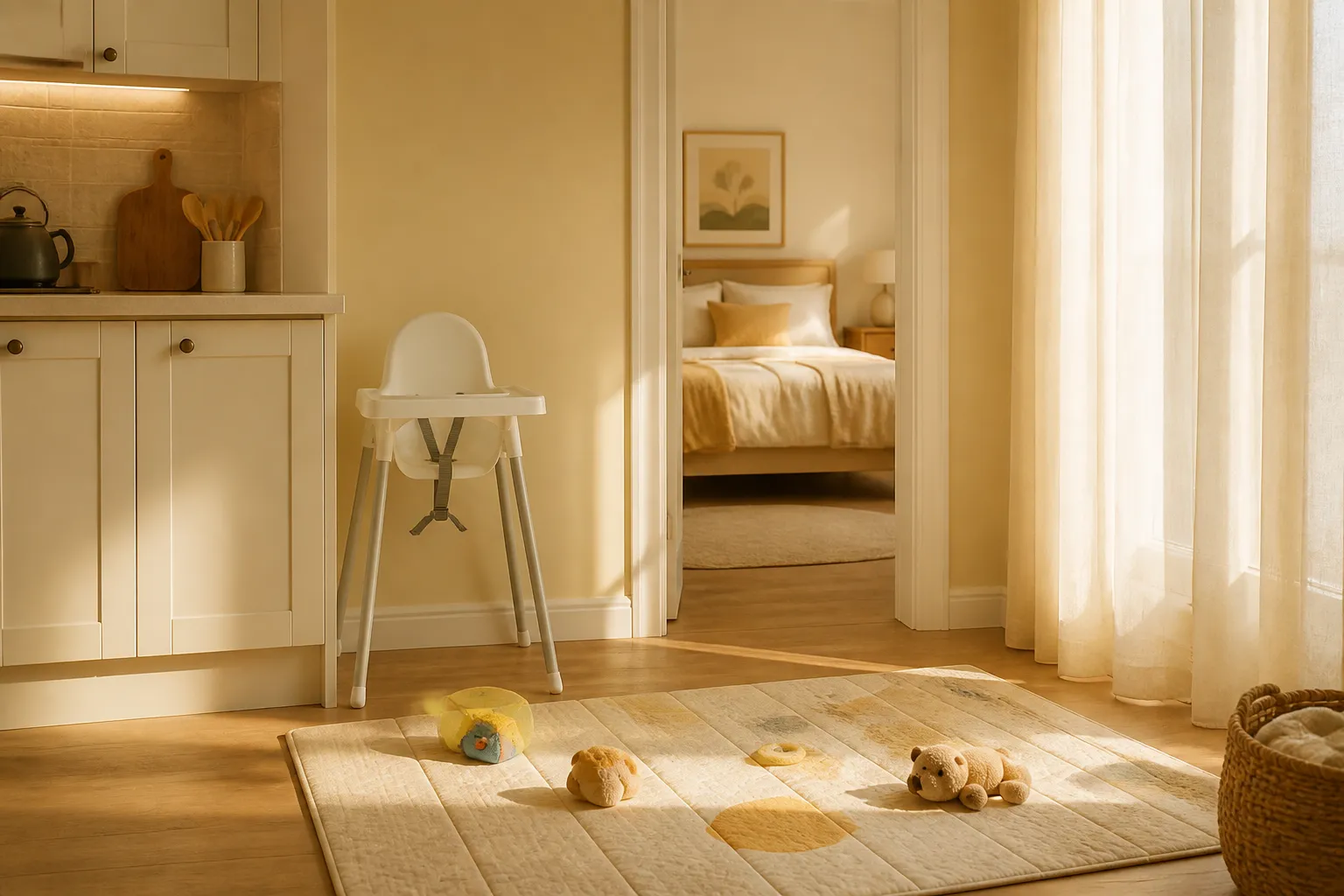
For a first overnight, prioritize quiet, easy entry, and enough floor space to move without constant collision. A fancy address with stairs, noise, and no kitchen backup can turn a simple practice trip into logistics theater. Ask the practical questions before booking, especially about the sleeping setup.
Arrival should not require a complicated sequence. If check-in is late and dinner is later, the bedtime anchor slips before you unpack. Prefer stays where you can get inside, set up sleep cues, and feed everyone without crossing half a neighborhood first.
- Quiet sleeping space away from the loudest street side.
- Simple food support for arrival night and morning.
- Manageable entry with bags and a tired toddler.
- A room layout that allows wind-down without constant walk-through traffic.
Keep the next morning deliberately light
Many families survive the night and then overbook the morning as compensation. Resist that urge. Plan a slow start, a familiar breakfast, and one gentle activity at most. If sleep was rough, the morning is for recovery and observation, not for catching up on an adult itinerary.
Use the return window wisely. Leaving too late can recreate the same fatigue cycle you were studying. Leaving with margin lets you end the practice trip while you still have enough calm to notice what worked. The point is to finish with usable notes, not with a final heroic stop.
After you get home, write three lines while memory is honest: what protected bedtime, what stole the evening, and what you will never pack into a first overnight again. Those lines become the base for the next, slightly wider trip.
A compact first-overnight checklist
Before you commit to dates, run one compact checklist. If several answers are shaky, shorten the plan again. A successful first overnight is usually the one that looked almost too simple on paper and still asked for your full attention in real life.
- Is the stay close enough that the transfer will not consume the day?
- Is bedtime protected with a clear wind-down buffer?
- Is there only one main daytime stop, easy to abandon?
- Are dinner and snack backups already decided?
- Are sleep cues packed where you can reach them on arrival?
- Is the morning light enough to absorb imperfect sleep?
If you can answer yes to most of these, you are ready enough. You will still meet surprises. The difference is that the plan can bend without breaking, and the overnight can teach you how your family travels instead of demanding a performance nobody can sustain yet.
Talk through expectations with every adult on the trip
First overnights get harder when adults arrive with different private scripts. One person may hope for a mini-vacation atmosphere. Another may only want the child to sleep. Say the goal out loud before departure: this is a practice overnight focused on bedtime, food timing, and recovery. Shared language prevents silent disappointment from turning into friction in the room.
Divide roles before you are tired. Who leads wind-down? Who handles the quick dinner fallback? Who steps outside with the child if a reset is needed? Clear ownership reduces the chance that both adults improvise in opposite directions at the worst minute.
If a grandparent or friend joins, brief them on the same constraints. Helpful adults sometimes extend the day with one more activity because they want the trip to feel special. Special, on this outing, is a calmer night and a usable morning.
Pack only the overnight tools that protect the evening
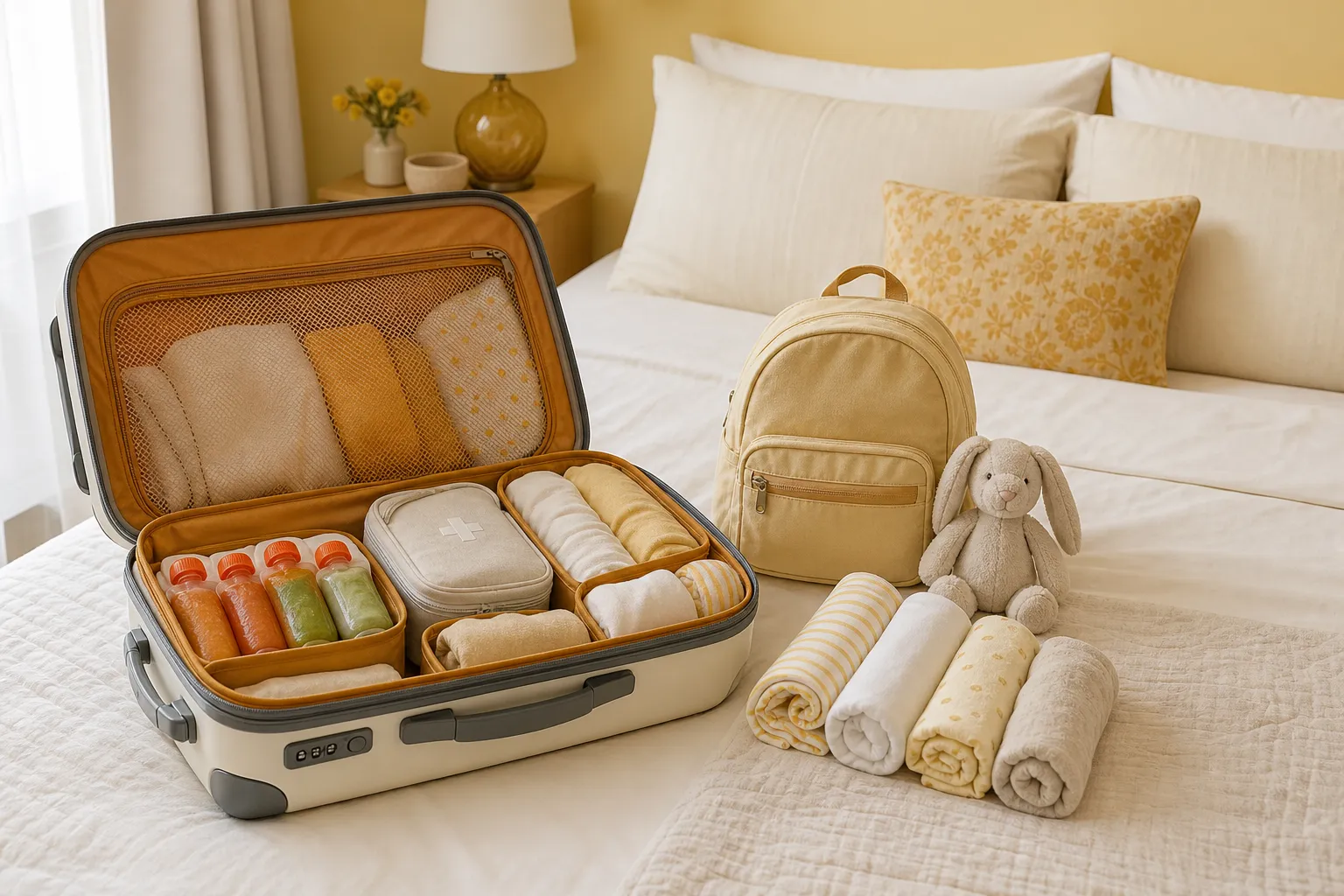
Packing for a first overnight should stay narrow. Bring sleep cues, one comfort object, a spare outfit, trusted snacks, and the few hygiene items that keep bedtime moving. Leave the “maybe we will need this for a longer adventure” pile at home. Extra objects create decision noise when you need a short arrival routine.
Put the evening kit where it can be opened first. If pajamas and the comfort object are buried under daytime clothes, setup steals minutes you meant to spend on wind-down. Arrival order is part of the overnight design: enter, set sleep space, feed, then quiet cues.
- Familiar sleep cue that still works when the child is overstimulated.
- Spare clothes reachable without full unpacking.
- Snack backup that does not depend on a perfect restaurant.
- Simple night-light plan or equivalent from home habits.
- Morning basics staged so an early wake does not scramble the room.
Handle early waking without rewriting the whole trip
Early waking is common in a new room. Decide in advance what “the morning has started” means. A quiet hold in dim light may buy time. A complete restart with bright play and a big outing usually deepens fatigue. Keep the first hour small: water, comfort, breakfast planning, and a delay before any transition out of the building.
If the night was fragmented, shrink the daytime plan immediately. This is not a punishment and not a failure. It is how you keep the practice trip informative. One short outdoor loop and an earlier return will teach you more than forcing the original secondary stop because it was already on the list.
Write down wake time, what helped, and what made the child more alert too soon. Those details shape the next overnight more accurately than a general memory that “sleep was rough.”
End with a debrief that stays kind and specific
Before the trip story hardens into joke or frustration, capture a short debrief with the other adult. What protected bedtime? Which transfer cost too much? Which meal plan worked? Which expectation needs to be retired? Keep the tone practical. The overnight is data collection for family travel, not a verdict on anyone’s parenting.
Then choose the next step that matches what you learned. Some families are ready for two nights nearby. Others need another single overnight with an even quieter room. Wider routes can wait until the sleep pattern in a new place feels less mysterious.
A first overnight succeeds when you return with a clearer method. Closer and shorter is not a lesser trip. It is the form that lets a toddler's real pace stay visible long enough for you to plan the next journey with fewer illusions and more usable care.