Lodging questions to send before you book
Listing photos show sofas and sunlight. They rarely show street noise at night, a kitchen with no real tools, or a floor plan where a child has nowhere to move. Send a short set of questions before you book so the stay can support rest, meals, and recovery.
Ask before the booking, not after the meltdown
Once payment is locked, leverage shrinks and stress rises. The right moment for lodging questions is while alternatives still exist. Keep the message polite, specific, and easy to answer. Hosts respond faster when they can reply with short facts instead of long essays.
Focus on the conditions that change a family day: where people sleep, where food comes from, how loud the night is, and whether a tired child can play without blocking the only walkway. Those details matter more than decorative amenities that look impressive and stay unused.
Kitchen access is a pacing tool
A usable kitchen is not about cooking ambitious meals. It is about protecting timing when a child will not eat out, when dinner runs late, or when morning needs to stay calm before a transfer. Ask what “kitchen access” actually covers.
- Is there a fridge with enough space for simple milk, fruit, and leftovers?
- Are there basic tools for heating and serving, or only a decorative counter?
- Can you wash bottles, cups, or snack containers easily?
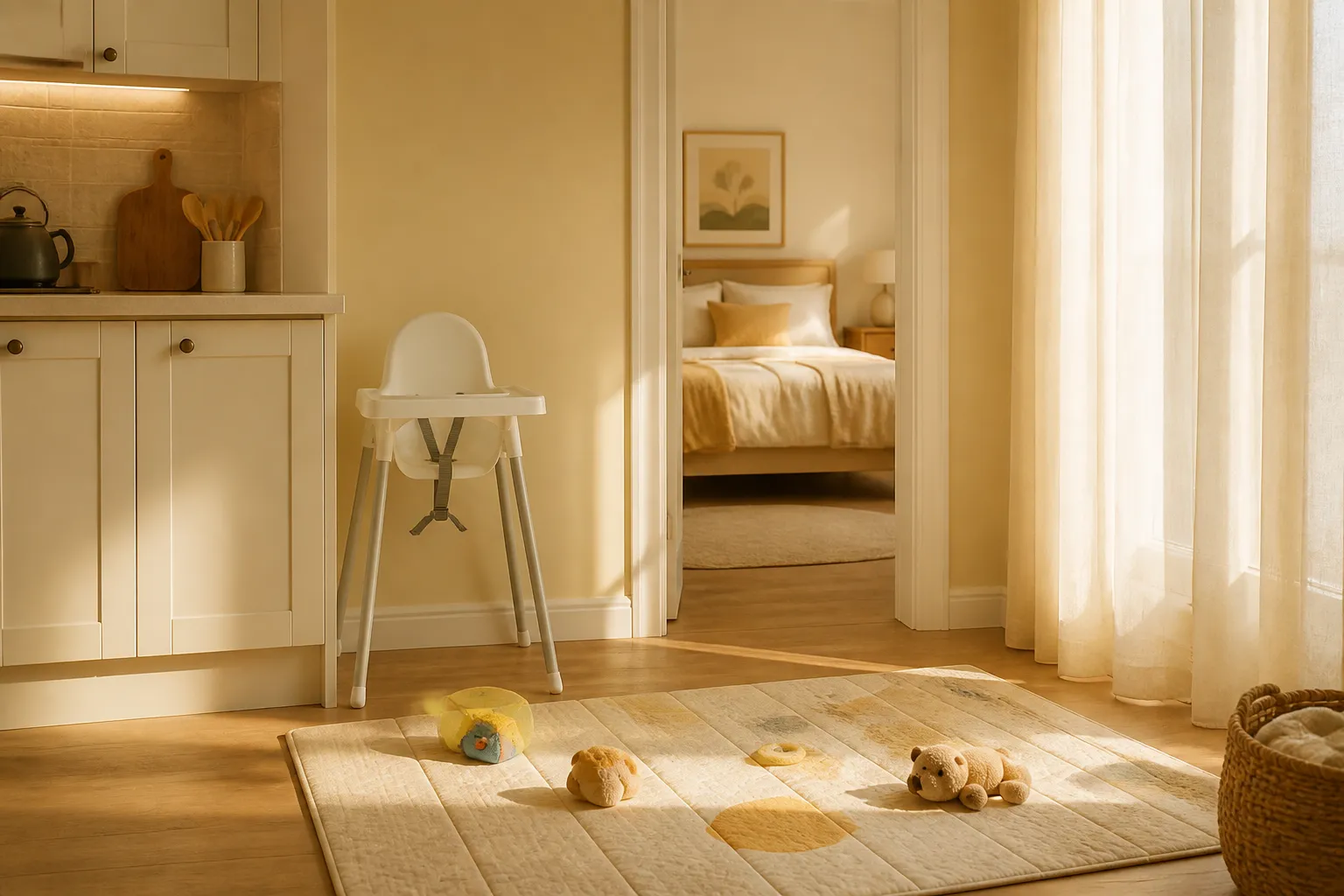
- Is a high chair or booster available, and what condition is it in?
If the answer is vague, treat the kitchen as unreliable and plan portable food backup. Clarity here prevents the afternoon hunt for one acceptable meal while energy is already collapsing.
A beautiful listing with an unclear kitchen often creates more friction than a simpler place that can handle breakfast, snacks, and an early night in.
Noise, light, and the room where sleep must happen
Ask which bedroom is quietest and what faces the street, courtyard, or elevator. Request honesty about nightlife, early traffic, and thin walls. A child who sleeps lightly can lose the next day to one loud night, even if the sofa photos looked calm and soft.
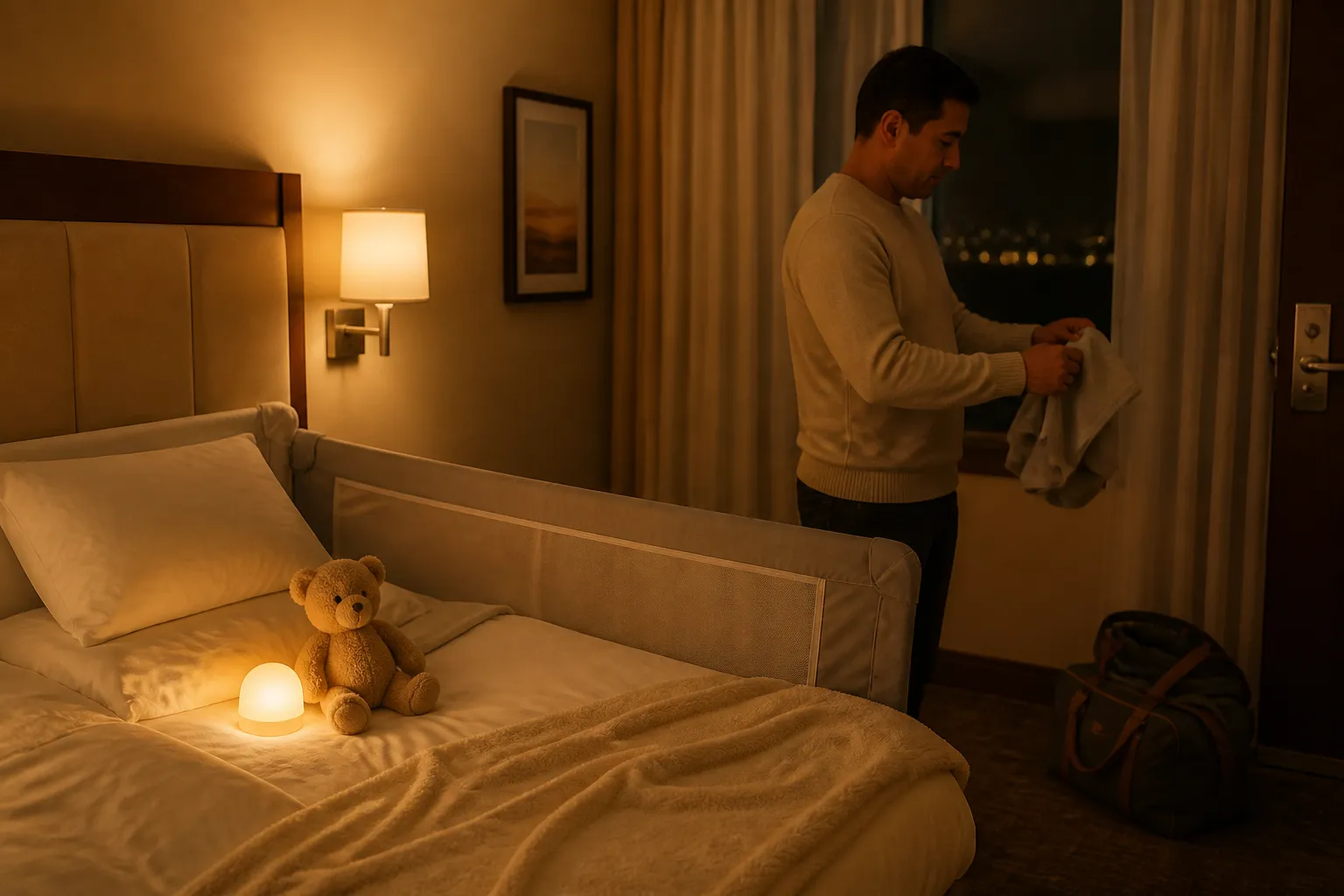
Also ask about blackout options and whether a small night light is available or welcome. You do not need a perfect nursery. You need a room where wind-down cues can work. If the only sleeping space is a bright open loft beside the entry door, factor that in before you commit.
Floor level, stairs, and how arrival will feel
Arrival with bags and a tired child is its own test. Ask about floor level, elevator access, stair counts, and whether strollers can enter easily. A charming upper unit can become a daily strain if every reset means carrying a child and luggage through a narrow stair.
- Confirm how you enter with bags at check-in time.
- Ask whether parking or drop-off is close to the entrance.
- Check if the main living level matches the sleeping level.
- Ask about building doors, codes, and late-return access.
These questions sound logistical, but they protect mood. Families underestimate how much stair friction shortens patience before dinner even begins.
Crib space, floor space, and the play corner test
Ask where a crib or toddler bed can go without blocking doors. Then ask a more revealing question: where can a child play for twenty minutes while an adult prepares food or answers a message? If the answer is “nowhere except the hallway,” keep searching.
You are not requesting a playroom. You are confirming that the floor plan can absorb a family without constant collision. Low furniture edges, a clear corner, and a door that closes for sleep are practical advantages. Photos taken from a high corner can hide how tight the room feels at a child's height.
- Is there safe floor space away from the kitchen zone?
- Can a play mat stay down without blocking walking paths?
- Are outlets covered or easy to manage with young children?
- Is the bathroom quickly reachable from the sleeping area at night?
A host-ready message you can send as is
Keep one reusable note and adjust only ages and dates. Short questions get faster answers. This structure covers the essentials without sounding demanding:
- Who is traveling and how many nights you are considering.
- Kitchen tools and fridge access for simple meals and snacks.
- Quietest sleeping room and any known noise sources.
- Floor level, stairs, elevator, and stroller access.
- Crib or toddler bed space and a small indoor play area.
If a host answers clearly, you learn as much from the tone as from the facts. Precise replies usually signal a stay that has already hosted families. Vague enthusiasm with no details is a warning to slow the booking down.
Decide with the day map in mind
Lodging is part of pace planning. A quieter unit with a usable kitchen can support fewer restaurant dependencies and earlier nights. A stylish place with poor sleep conditions can force longer mornings and shorter tempers, no matter how good the nearby attractions appear.
Choose the stay that protects recovery. Then build the route around that recovery. When lodging questions come first, packing gets easier, meals get calmer, and the trip has a place to land when the day does not go as planned.
Read between the lines of a host reply
A useful reply names rooms, distances, and limits. A weak reply repeats marketing language and avoids details. If a host says the place is “great for families” but cannot describe noise, stairs, or kitchen tools, keep asking or move on. Enthusiasm without facts is not information.
Watch for answers that shift responsibility back to you without data: “It depends,” “You should be fine,” or “Most guests love it.” Those phrases may be friendly and still leave your rest plan unsupported. Ask one clarifying follow-up. If clarity never arrives, treat that as an answer.
Strong hosts often volunteer constraints. They may mention weekend street noise, a steep stair entry, or a compact fridge. That honesty is valuable. You can plan around a known limit more easily than around a surprise discovered after bedtime has already slipped.
Match lodging choice to the first stretch of the trip
For many families, the opening stretch sets the tone. If those days include a long transfer, protect sleep quality and kitchen simplicity even more. A slightly less central stay with quieter nights can support a better second morning than a flashy address beside constant traffic.
Think about where dinner will come from on arrival night. If you will land late, kitchen access or a reliable nearby food option becomes part of lodging quality. Nearby attractions will not help if the household is already unraveling over a missed meal and a noisy room.
Revisit your questions whenever the itinerary changes. A stay that works for a slow weekend may fail for an early departure morning. Lodging is not a trophy. It is infrastructure for the pace you are trying to keep with a child.
Save the answers where the whole group can see them
Put the host replies in one shared note with the booking details. Include entrance instructions, quiet-room notes, kitchen facts, and the play-space answer. When more than one adult is traveling, this prevents repeated uncertainty at the doorway and reduces decision fatigue after a long transfer.
If you later book a different place, archive the note instead of deleting it. Patterns appear quickly: which questions expose weak listings, which answers predict a calm night, and which amenities never mattered. That record makes the next booking faster and less emotional.
Over time, the checklist becomes part of your family travel craft. You stop hoping the photos told the truth. You ask, you compare, and you choose the stay that can carry real evenings — snacks, early nights, and a child who needs room to move before sleep.